
One of the ads in this piece ran for 1,714 days. Another one, from a similar category, got pulled after 2.
Same industry, same buying intent, wildly different lifespans. The difference wasn’t the offer or the budget.
It came down to one thing: whether the copy told people what the product does, or what happens to their life because of it.
That’s the whole game. Features describe the product, benefits describe the after, and most copy gets stuck describing the product because that’s what founders and product teams talk about all day.
We’re not going to explain that rule again in the abstract. Instead, here are 30 real feature statements rewritten as benefits, grouped into six categories, with real ad and landing page evidence from ROI Obsession’s own work showing which version the market actually rewarded.
The Two-Question Rule Behind Every Rewrite
Every rewrite below follows the same mechanic. Take the feature and ask “so what?” Answer it.
Then ask “so what?” again. The second answer is almost always the real benefit, the one that touches money, time, status, or fear.
| Feature | First “so what?” | Second “so what?” (the real benefit) |
|---|---|---|
| 256-bit encryption | Data is protected | You don’t get the call that ends your career |
| Automated meal plans | Less time planning | Dinner’s decided before your coffee’s cold |
| 24/7 live chat | Faster replies | You’re never stuck alone at midnight |
Notice the pattern: the first answer is still a feature in disguise.
It’s the second question that gets you to something a human actually feels. Run every line of your ad or landing page through this twice before you ship it.
The data backs this up at scale. Unbounce’s Conversion Benchmark Report found benefit-driven headlines converting up to 220% better than generic ones, and CXL Institute has tied professional, benefit-focused copywriting to conversion increases averaging 113%.
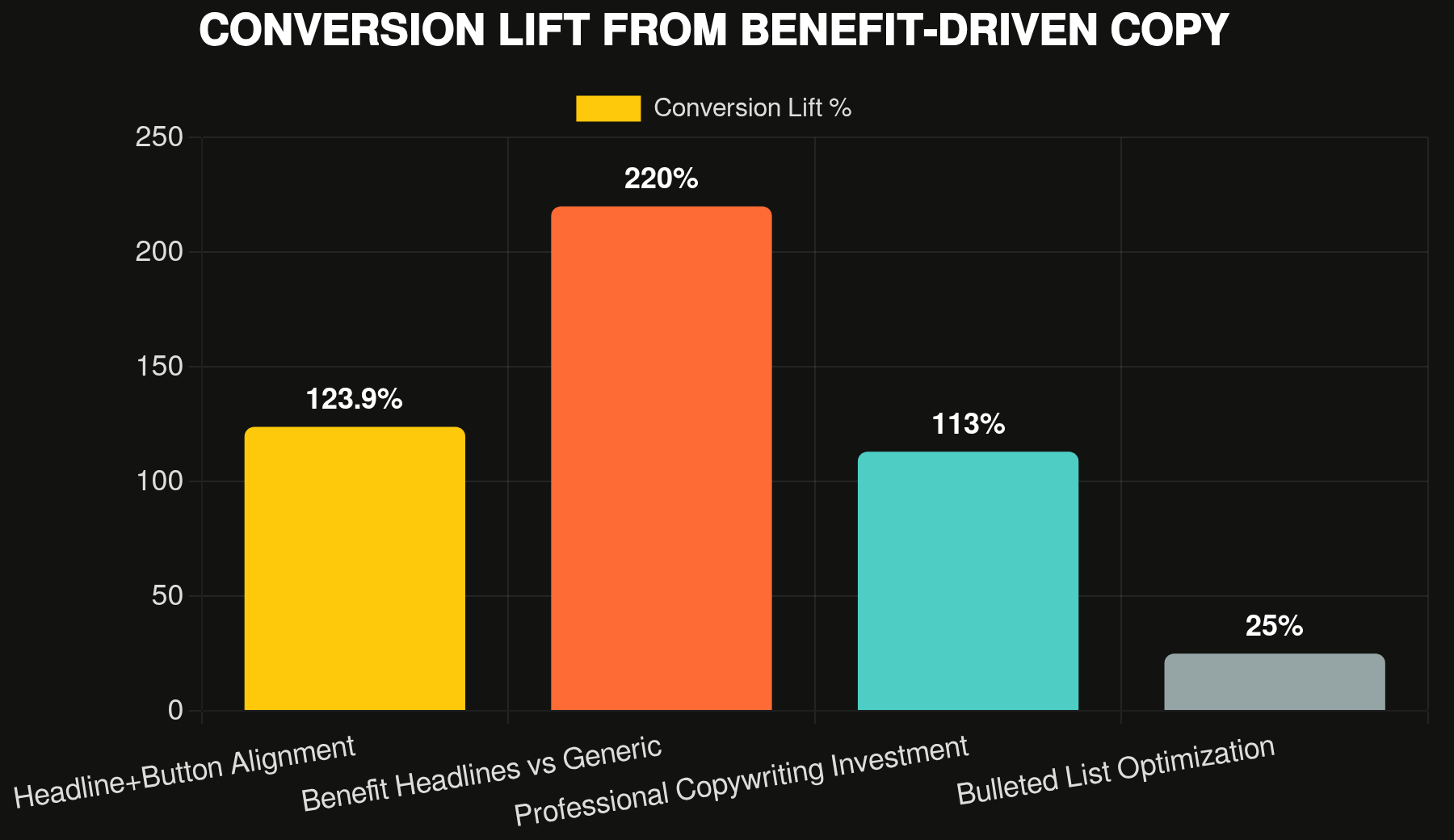
That chart lines up with what Copyhackers found when testing headline and button copy together: aligning a benefit-led headline with a matching button copy produced a 123.9% lift in one case study.
The lesson isn’t “benefits are nice.” It’s that benefit language is doing measurable commercial work, line by line.
Insight
Most copywriters stop at the first “so what” and ship it straight to the headline. The real leverage sits one question further down, at the point where the answer stops being about the product at all.
Speed
Speed is the easiest category to get lazy on, because “fast” feels like a benefit already.
It isn’t. Fast at what, and what does that let the person avoid?
- Feature: Automated meal plans generated in seconds → Benefit: Decide what’s for dinner before you’ve finished your coffee.
- Feature: Bulk export to CSV in one click → Benefit: Get your weekly report out 40 minutes earlier, every single week.
- Feature: Real-time sync every 5 seconds → Benefit: Stop re-typing the same customer detail into two systems.
- Feature: One-click checkout → Benefit: Buy in under 8 seconds, before the impulse fades.
- Feature: Instant quote generator → Benefit: Give the customer a price while they’re still on the phone with you.
The meal-planning example isn’t hypothetical. It’s the exact mechanic behind two of the longest-running ads in our competitive database.
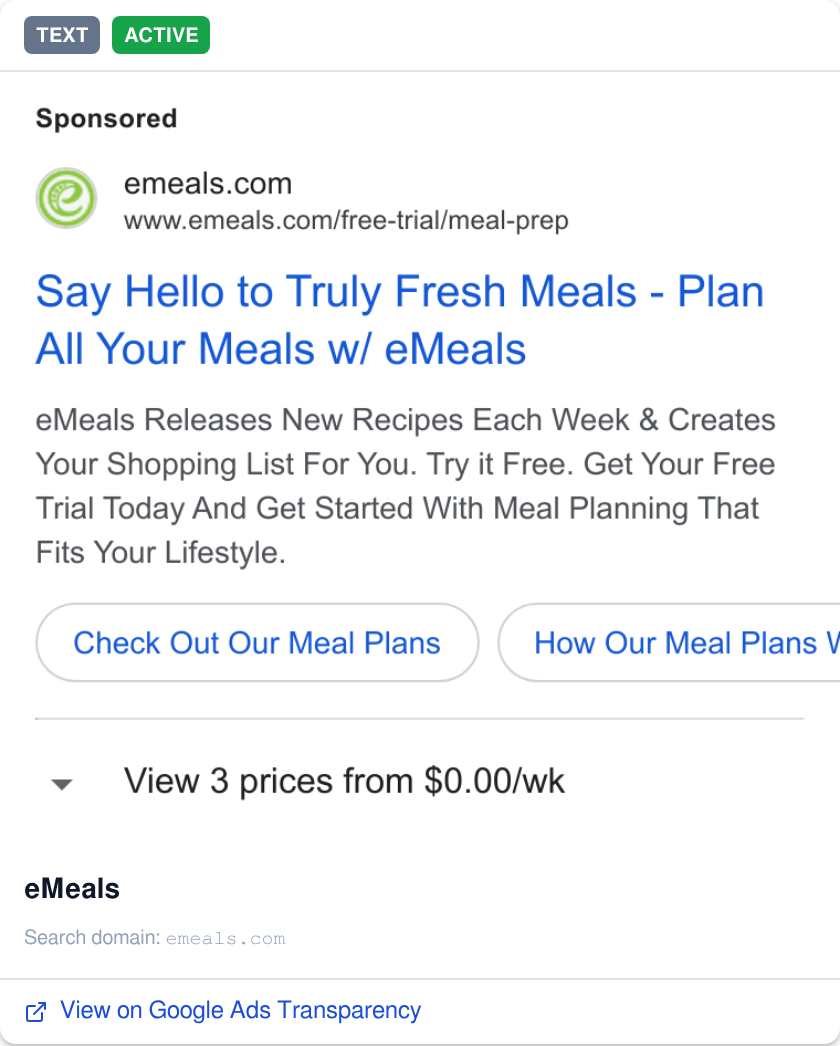
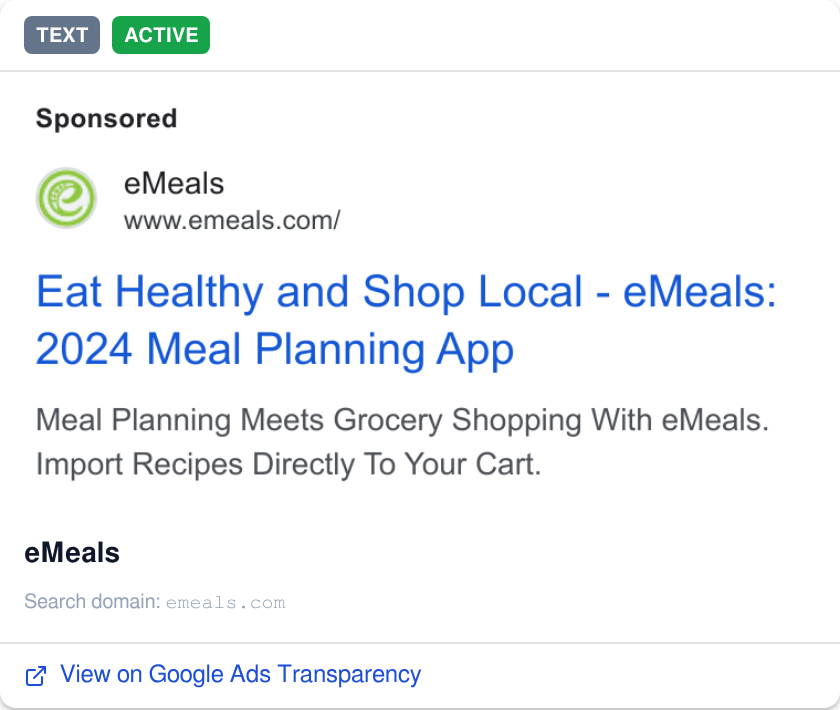
Both ads have run for over three years combined. Neither one talks about “customisable meal plans with grocery list integration,” which is the feature.
Both talk about what a busy household actually wants: the decision made for them, and dinner handled without the nightly negotiation.
That’s why the market kept funding them long after most ads in the category had cycled out.
Quick Win
Test your next speed-based headline by naming the exact minute or moment saved instead of the word “fast” or “instant.” Specificity is what turns a buzzword into a benefit.
Ease
Ease is where feature-first thinking sneaks in hardest, because “easy to use” sounds like marketing filler until you name exactly what becomes easy.
- Feature: Drag-and-drop template builder → Benefit: Launch a campaign without touching a line of code.
- Feature: Pre-built integrations library → Benefit: Connect your tools without filing an IT ticket.
- Feature: Guided onboarding wizard → Benefit: Be fully set up before your coffee goes cold.
- Feature: Unified dashboard → Benefit: Stop switching between six tabs to find one number.
- Feature: No-code workflow editor → Benefit: Build the automation yourself, no developer ticket required.
Two homepages show this translation happening in real time, at brands most readers already use.
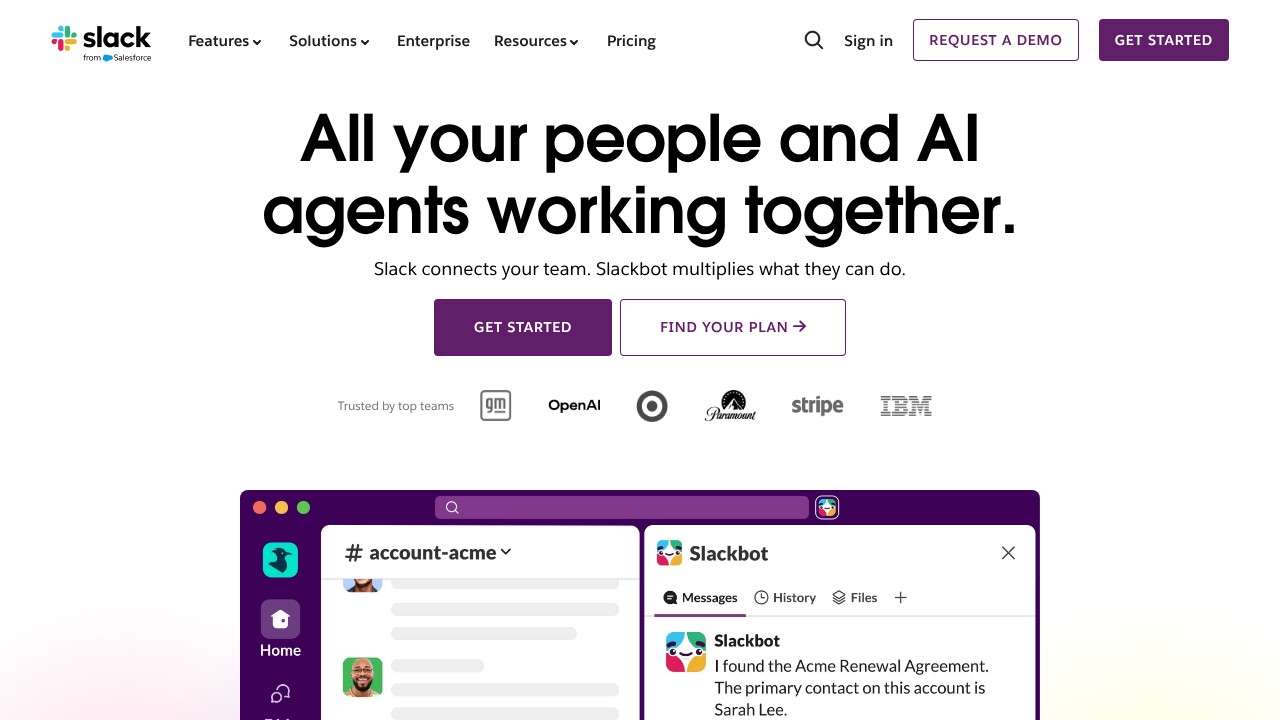
Slack’s homepage doesn’t lead with “channels, threads, and third-party integrations.” It leads with staying in sync and working faster, which is the felt outcome of all three features stacked together.
The feature list still exists, it’s just three scrolls down, after the benefit has already earned the click.
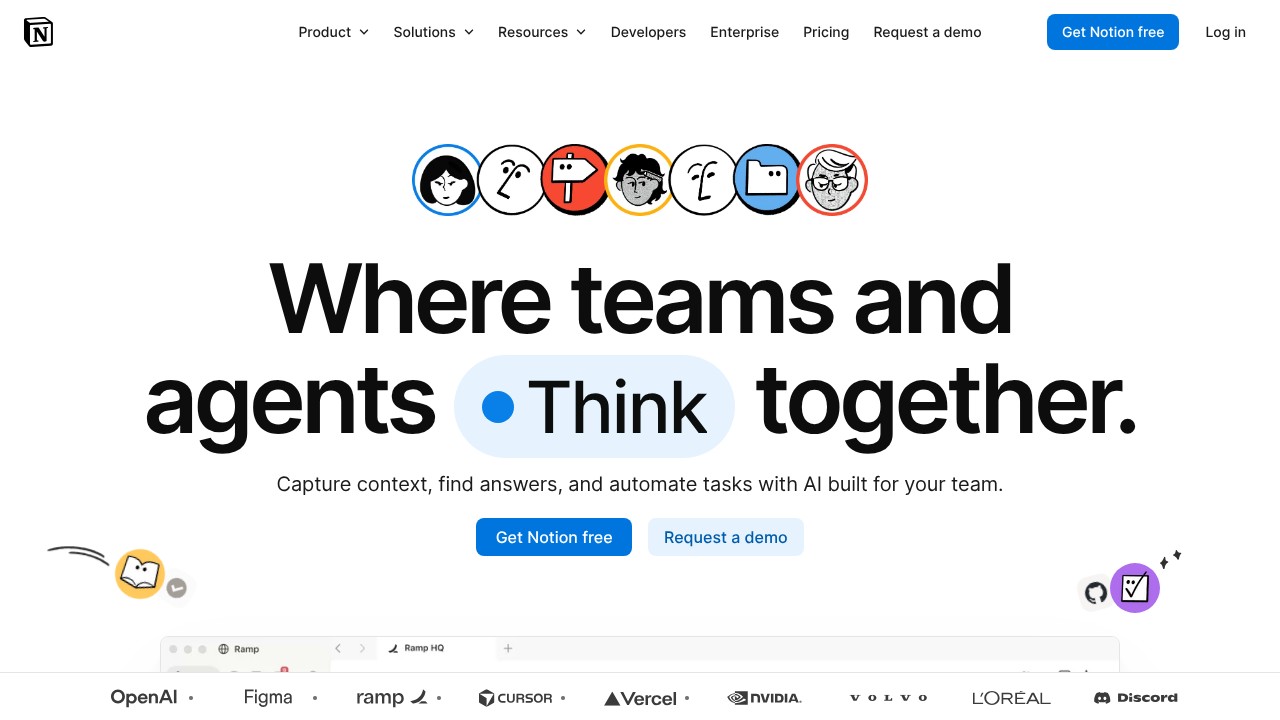
Notion does the same collapsing trick with a much bigger feature set. Docs, wikis, and databases could easily produce a cluttered, feature-heavy headline.
Instead the hero copy compresses all three into a single outcome statement.
That’s the model: list your features internally, then find the one sentence that sits above all of them. This kind of line-by-line rewrite is exactly the work our direct response copy team does for clients every week.
Pro Tip
Write your full feature list first, get it all out of your head, then delete it and write one sentence describing the relief the whole list adds up to. That sentence is your headline.
Security
Security copy fails constantly because compliance teams write it, and compliance teams are trained to describe controls, not consequences.
The benefit of a security feature is almost always the removal of a specific fear.
- Feature: 256-bit encryption at rest and in transit → Benefit: Sleep at night knowing a breach won’t put your name in a headline.
- Feature: SOC 2 Type II certified → Benefit: Pass procurement review without a single follow-up email.
- Feature: Role-based access controls → Benefit: Know exactly who touched the client file, every time.
- Feature: Automatic daily backups → Benefit: Lose a laptop, not three years of work.
- Feature: Two-factor authentication → Benefit: Stop the 3am panic call about a compromised account.
The tell here is that every rewrite names a moment, not a mechanism. “Encryption” is a mechanism.
“The headline that never gets written about you” is a moment. If your security copy can’t be pictured as a scene, it’s still a feature.
Keep In Mind
Compliance certifications like SOC 2 still belong on the page, since buyers doing due diligence need them. Just don’t let the certificate name be the headline; let it sit as proof underneath the fear you’ve already named.
Integration
Integration features are notorious for reading like a systems diagram. Nobody wakes up wanting an API.
They wake up wanting the manual work between two tools to disappear.
- Feature: Native API with 200+ endpoints → Benefit: Pull your numbers into the system your team already lives in.
- Feature: Zapier and native webhook support → Benefit: Stop copy-pasting leads between five different tools.
- Feature: Single sign-on with your identity provider → Benefit: One password, one login, zero help desk tickets.
- Feature: CRM sync with HubSpot and Mailchimp → Benefit: Every lead lands where your sales team already works.
- Feature: Open API and webhook triggers → Benefit: Make your stack talk to itself, without hiring a developer.
Here’s the quick diagnostic we use internally: if the feature name would only make sense to someone with an IT background, it needs translating for the ad or landing page headline.
Keep the technical name in a spec sheet or FAQ further down the page for the buyers who do want to verify it. Just don’t lead with it.
Insight
The buyer who cares about the API’s endpoint count is almost never the one who approves the purchase. Write the headline for the person who signs off, not the person who’ll eventually configure it.
Support
This is the category where the cost of skipping the translation shows up fastest, because two real ads from the same product category sit on opposite ends of the runtime spectrum.
- Feature: 24/7 live chat with a 90-second average response → Benefit: Get unstuck at midnight, not next business day.
- Feature: Dedicated onboarding specialist → Benefit: Never explain your business from scratch to a stranger.
- Feature: 500mg of clinically studied ashwagandha per serving → Benefit: Feel your shoulders drop by week two.
- Feature: 12 vitamins and minerals per gummy → Benefit: One less thing on your morning checklist.
- Feature: In-app help centre with 300 articles → Benefit: Find the answer yourself, in the time it takes to make tea.
Now look at what happened to two supplement ads built on nearly identical categories.
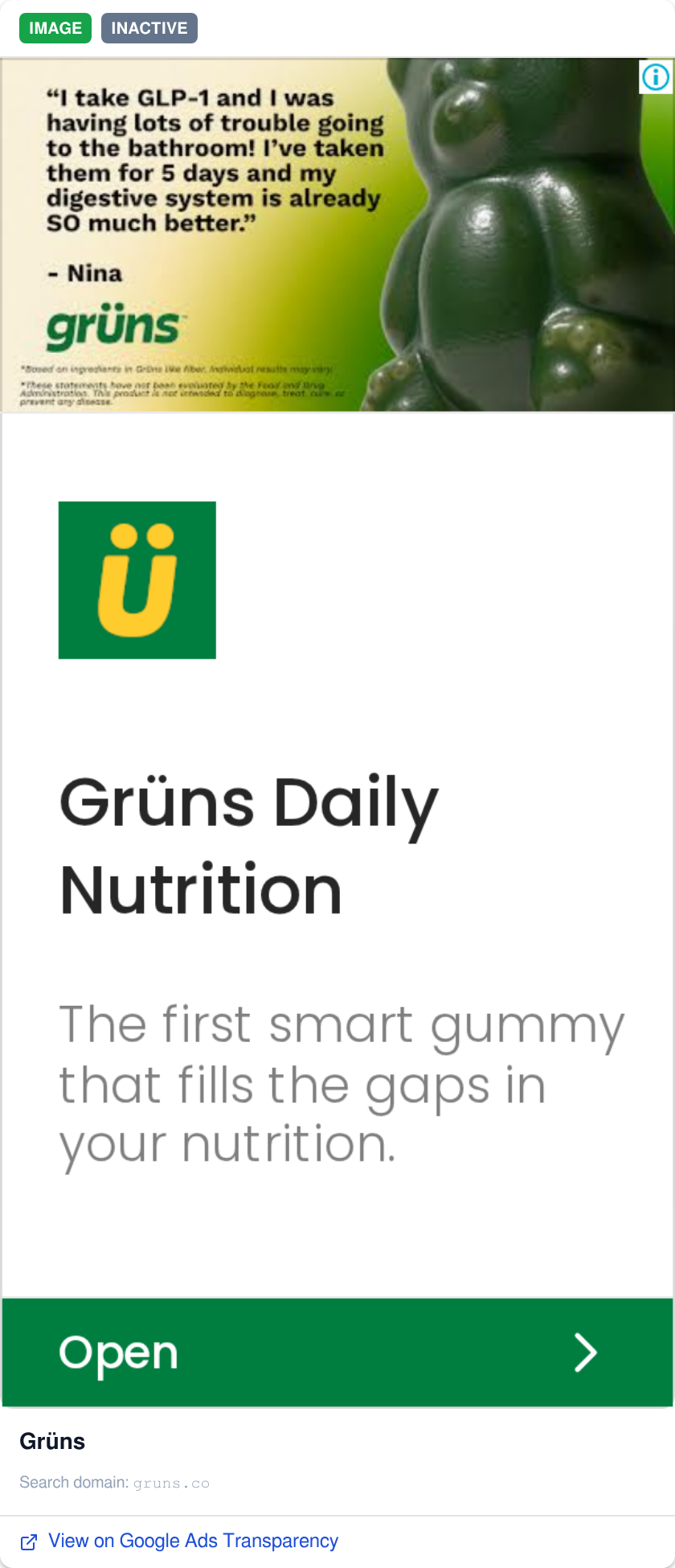
This ad was deactivated after just 2 days. The pattern in ads like this is a feature or ingredient list with no stated payoff: dosages, formulas, or ingredient names presented as if the reader already knows why they should care.
When the copy assumes the “so what?” instead of answering it, the buyer has to do the translation work themselves. Most won’t bother, and the market pulled the plug fast.
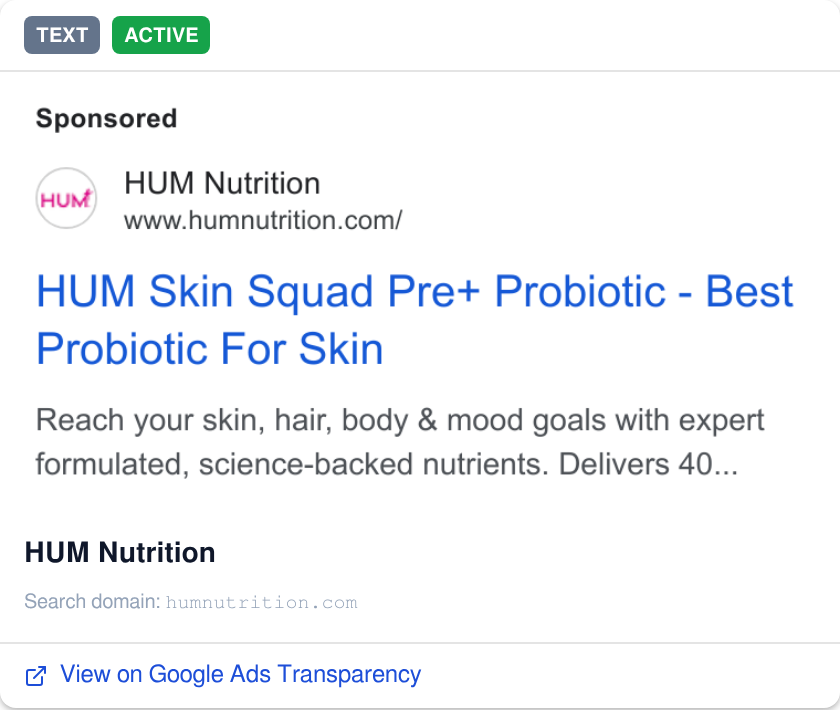
Compare that to an ad that’s run for 1,714 days in a related category. The difference isn’t a better ingredient.
It’s that the copy does the translation for the reader, converting a dosage or formula into a felt outcome, something the buyer can picture happening to their own body or day.
One ad handed the reader a chemistry lecture. The other handed them a result. The runtime gap is the market’s verdict on which one it wanted.
Expert Take
The fastest way to spot feature-only copy is to read it out loud to someone outside your industry. If they ask “okay, so why does that matter to me?” out loud, that’s the exact line that needs the second so-what question.
— Sarah Mitchell, Senior Copywriter, ROI Obsession
Pricing
Pricing copy is where “features” quietly turn into numbers, and numbers without context read as risk, not value.
The benefit of a price point is rarely the number itself. It’s what the number lets the buyer avoid or achieve.
- Feature: Tiered plans from $19 to $199 per month → Benefit: Pay for what you use today, grow into the rest later.
- Feature: No setup fee, cancel anytime → Benefit: Try it properly, with zero financial hostage situation.
- Feature: Annual billing saves 20% → Benefit: Pocket two months’ worth of budget, every year.
- Feature: Free tier up to 500 contacts → Benefit: Prove it works before you spend a cent.
- Feature: Volume discounts at 10, 50, 100 seats → Benefit: The bigger your team gets, the smaller the price feels.
Worked example: say your tool costs $99 a month and a competitor’s costs $79.
Listing “$99/month” next to their “$79/month” is a feature comparison you’ll usually lose on price alone.
Reframed as a benefit (“save 6 hours of admin a week, worth roughly $150 at a $25 hourly rate, for $20 more than the cheaper option”), you’ve turned a losing price comparison into a value equation the buyer can do in their head in seconds.
That’s not a trick. It’s just finishing the sentence the price started. Translating price into value like this is core to how we build conversion funnels that don’t lose buyers at the objection stage.
By the Numbers
Price framing shows up in the results, not just the words. One financial services client dropped their client acquisition cost to under $100 once the offer was reframed around value instead of a bare price tag.
This Isn’t Just an Ads Problem
The same translation failure shows up in email, which happens to be one of the most measurable channels in marketing.
Litmus reports average email marketing ROI between $36 and $42 for every $1 spent.
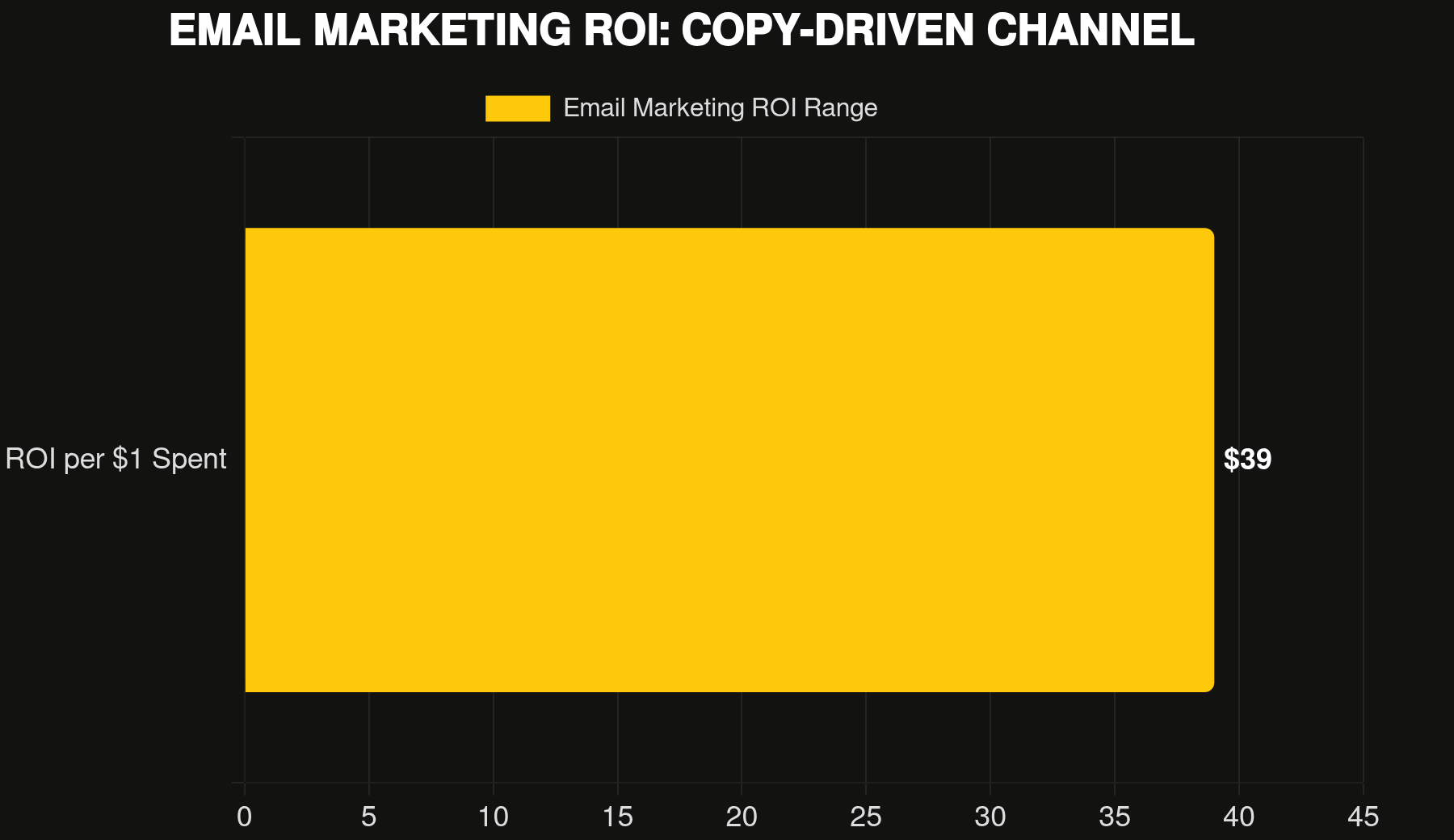
That return exists almost entirely because of copy quality. There’s no creative format, no targeting layer, no algorithm doing the persuading in a plain-text email.
It’s the subject line and the first two sentences, doing exactly the same feature-to-benefit job as an ad headline.
If your subject lines read “New feature: bulk export now available,” you’re paying that channel’s extraordinary ROI potential in feature language.
Rewrite it as “Get your Friday report out 40 minutes earlier” and you’re using the same channel to sell an outcome instead of announcing an update.
Quick Win
Before your next send, rewrite only the subject line using the two-question ladder and split test it against the original. Subject lines are the cheapest, fastest place to prove this framework works on your own list.
How to Audit Your Own Copy This Week
Pull up your last five ads or your homepage hero section. For each headline or bullet, ask: does this describe what the product does, or what happens to the reader’s life?
If you can’t answer in under three seconds, it’s still a feature.
Run it through the two-question ladder from earlier in this piece: so what, and then so what again.
Stop at the answer that names a moment, a fear removed, or money saved, not a mechanism.
Then check your account’s own performance history the way we checked the ad database for this article.
Which of your ads or landing pages have been running the longest without a rewrite?
Pull the copy. Odds are it’s already benefit-led, and you can reverse-engineer the pattern for everything else you write next.
Pro Tip
Sort your ad account by runtime, not by spend, before you sort by anything else. The ads still live after 12+ months are usually your best free swipe file for what your specific audience responds to.
Prompts to Put This Into Action
Rewrite a batch of features. Use this when you’ve got a full feature list from a spec sheet or product page and need to translate all of it at once.
Here are [number] feature statements from my product: [paste list]. For each one, apply a two-question “so what?” ladder to find the underlying benefit. Give me the first-level answer and the second-level answer separately, then write a final benefit statement using the second-level answer. Keep each benefit under 15 words.
Diagnose an underperforming ad. Use this on any ad that stopped running early to figure out exactly which lines were still feature-led.
Here’s the copy from an ad that stopped running after [number] days: [paste ad copy]. Identify every line that describes a feature or spec rather than a benefit. Rewrite each flagged line as a benefit using the two-question method, and explain in one sentence why the original version likely failed to hold attention.
Build a category-specific swipe file. Use this to generate a starting set of feature-to-benefit rewrites for your specific product category.
I sell [product/service] in the [speed/ease/security/integration/support/pricing] category. Generate 10 feature statements typical for this category, then rewrite each as a benefit following this pattern: Feature: [feature]. Benefit: [outcome the buyer feels or avoids]. Make each benefit specific enough to picture as a scene, not a general claim.
Pressure-test a headline. Use this before you ship any headline you’re not fully confident in.
Here’s a headline I’m considering for [ad/landing page/email]: ‘[insert headline]’. Tell me honestly whether this describes the product or the outcome for the buyer. If it’s still feature-led, give me 3 benefit-led alternatives that name a specific moment, saved cost, or removed fear, and keep the tone consistent with [brand voice description].
Turn a price into a value equation. Use this whenever you need to justify a higher price point against a cheaper competitor.
My product costs $[price] per [period]. A competitor charges $[competitor price]. Help me write a short value-equation sentence that reframes the price difference as a benefit, using a specific time or money saving of roughly $[estimated saving] to justify the gap. Keep it to one sentence, plain language, no hype.
Ready to Stop Describing Your Product and Start Selling the After?
Every rewrite in this article came from real ad and landing page data, but applying that pattern consistently across your own copy is a different job entirely.
On a free call, we’ll look at a handful of your current ads, emails, or landing pages and flag exactly where feature language is quietly costing you clicks and conversions.
There’s no pitch deck and no pressure, just a straight conversation about your goals. Book a free chat whenever suits you.
You're In!
Your subscription is confirmed. Welcome to the ROI Obsession community – expect deep dives, proven strategies, and exclusive LLM prompts straight to your inbox.



 Copy-paste marketing prompts